01/04/2026 – On hands: Robida 12 open call
Vida Rucli & Robida
Carə tuttə,
We are finally back with our newsletter which we abandoned when everything was too overwhelming – things happening in the (big) world and things happening in our small world. I won’t go into articulated updates on these pasts months since there are many traces online already → You can explore what me, Aljaž, Elena and Maria are reading here, what Elena and Antônio are building here, what Franca is annotating here, and listen to our voices through our radio archive here. Our radio space hosted specially meaningful conversations lately on translanguaging, decomposing languages, speculative infrastructures, smarginature, languages as spaces, mythopoiesis, functional and fictional spaces in Topolò, darning, permaculture – we are very thankful to all those who shared conversations and reflections with us, live on air, during diarietto sessions or just at our tables during dinners and breakfasts. We feel super lucky to have such beautiful minds and dear friends around us <3
During these last months some of us travelled - to Paris, Berlin, Eindhoven, Prato and soon to the US - while others were in Topolò, building dry stone walls, editing books - like the new book Pedagogies of the Art-Proximate by Sophie which we will publish in late spring or the book Footnotes by Franca, which is slowly fermenting - preparing exhibitions, picking primule and hosting friends.
But especially we published the new open call for Robida which this year will be dedicated to HANDS. In these last months the nicest things our hands encountered were a sewing machine, the double bass strings, friends’ hands (Vida), all cats, the binding tools, big heavy stones, small tomatoes seeds (Elena), leaves of unexpected textures, the last stone step of a Maya pyramid, the warmth beneath a T-shirt (Lau), old bricks, broken tiles, moist earth, anonymous stones (Antônio), a newborn baby’s skin, baby nettles, sourdough, bread and many pizzas (Dora), a lot of microphones and cables (Aljaž).
Read about the open call below. We are curious to read you!
Skip to the end of the letter for events and updates about Robida’s next months.
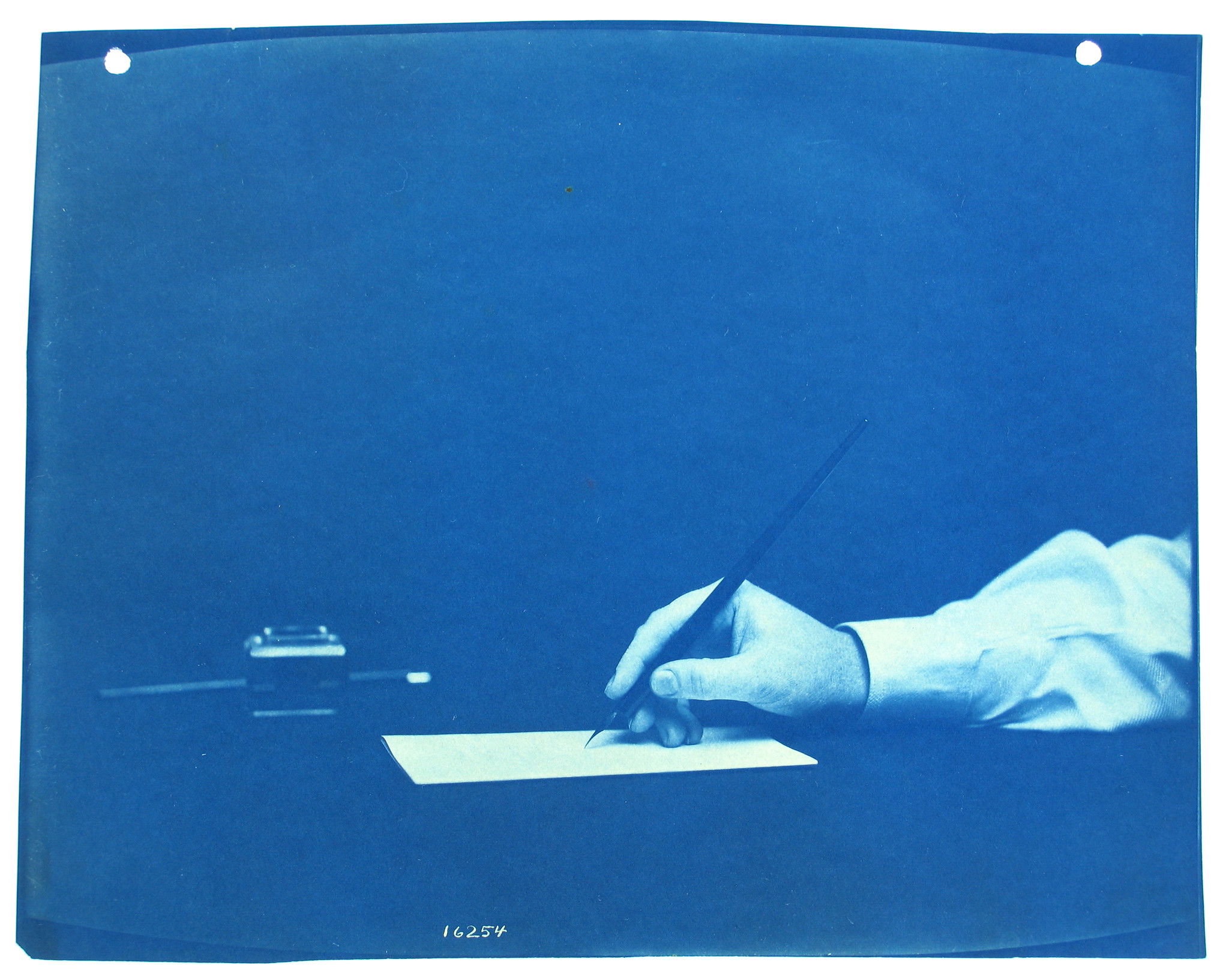
Robida 12
ROKE MANI HANDS
Deadline for abstracts or final contributions: May 1st
Read the open call on our website, download the PDF Franca designed and explore the are.na channel where we collected references, quotes, books and images.
The big news we would like to dedicate some space to is that the editorial board of this issue got enriched with three new people who are all already a big part of Robida’s family and whose practice and research are particularly fitting for a publication dedicated to hands → Sasha – bread maker, ex yoga teacher, gleaner and prolific list writer, Elena B. – researcher of conviviality, recipes and textile designer, and Antônio – designer, builder and researcher of crafts.
We asked each of them to share a little thought on this new adventure. Here is what they wrote:
SASHA
At the beginning of February I received a message from Vida asking if I would be interested in editing part of the upcoming issue of Robida on Hands – of course no pressure, no stress, no expectations <3 only a nice, kind invitation. Her gentle nudge made me smile and it felt very natural to say yes and to try something new. I said to her that I could imagine cosy phone calls, meals and moments around tables while creating something good together – the magazine providing a framework to be in contact with Robida friends in more of a structural way than usual. As someone who is either working with or observing other hands, of course the topic, a bit out of the ordinary for Robida, very much spoke to me too. I’m also finding out that the timeline of the magazine is a nice way to give a soft framework to the openness that I have created for myself this year after making some big changes. I look forward to soon being in supportive touch with the contributors and the exploring the content that we receive. Exciting!
Side note: there have been times in the past where I have been asked to take a little look at the English grammar of the magazine upon which I had the opportunity to discover the Italian tendency to create very, very long sentences. I love making them shorter and I love adding a bit of magic to a text by making sure it reads well. I will do my level best for this edition!
ELENA B
I received the invitation to join Robida’s editorial board exactly after two years of relocating myself from the Netherlands to Italy. A lot has happened since then—travelling around the north of Italy and the Alps searching for work, community, love and blooming times. But even while wandering, Topolò and its inhabitants always embraced me and my practice with tailored collaborations and acts of care: together we cooked, wrote, laughed, sewed, ironed, walked, cleaned, dance, sang, gossiped, climbed, washed and shared countless of moments. 🌀As I continue to delve into research on conviviality and recipes, I’m super excited to be working on the new issue dedicated to HANDS, especially because I guess it’s official ~ I’ll be spending this summer living in Topolò and taking care of Izba’s program! 💙
ANTÔNIO
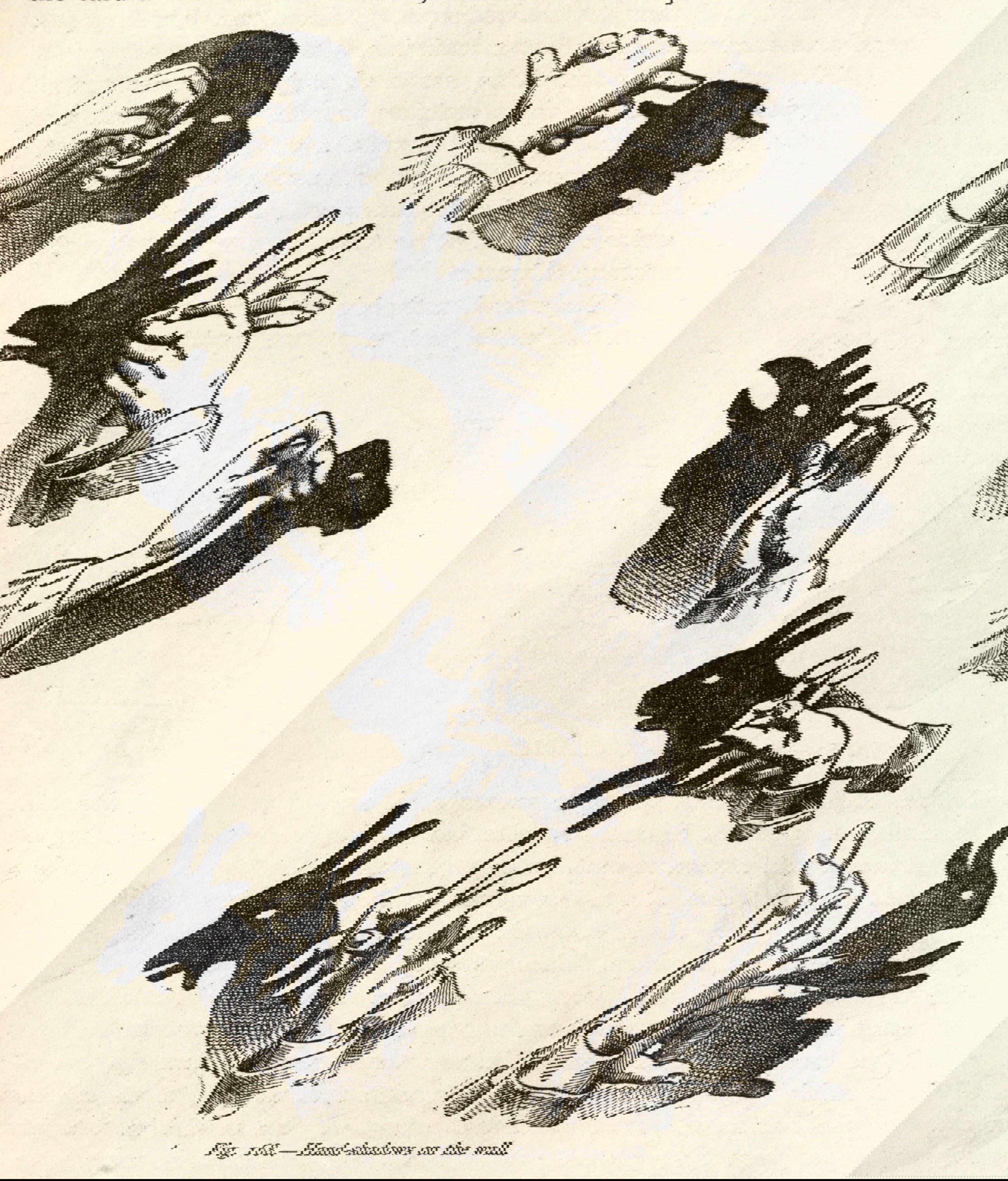
Another news of this issue is that we will work (again, after a first successful attempt in Robida 9!) with thematic sections, each curated by one editor. Below you find the description of each section which functions as a small open call.
HANDS SHAPING
By reversing the direction of agency in this passage, Vilém Flusser gestures toward something that exceeds the painter’s will in the relation between humans and materials. As a field of possibilities is disclosed by the working hand, the distinction between forming and being informed begins to blur. Such an intuition of entanglement is not limited to painting, but extends across different spheres of making. As André Leroi-Gourhan argued, the liberation of the hands marked a decisive threshold in human becoming. With bipedalism, the hand became available as a technical mediator, unleashing a long evolutionary process in which organs and memory were progressively exteriorised into tools, techniques and artifacts. Our hands allowed us to transform the world around us, which in turn transformed us.
This section turns to the many ways the hand mediates between humans and materials: weaving, sewing, carving, knitting, cutting, bending, splitting, forging, casting, turning, mending, joining, assembling. How does the hand participate in worldbuilding? Can thought emerge through the manipulation of matter? What role do specific materials and embodied knowledge play in shaping these relations? What are the prospects of manual labour in the face of increasing automation? And how has the appropriation, invisibilization, or suppression of the hand shaped the material world we inhabit?
– Antônio
HANDS TRACING
Hands that trace lines, hesitate, retrace their steps, begin again. In this section, we would like to receive contributions that reflect on drawing and designing as practices that develop through gesture: illustrating, sketching, mapping, scribbling; tracing paths that are simultaneously observation and imagination. Even a gesture in the air, like the trace of an imaginary path to follow.
We would like to collect materials of various kinds: finished images and traces of processes. Completed drawings and uncertain lines, mistakes, trials, which hold within themselves the possibility of transformation: the sketch of a shape, color tests, a set of dots, traces of different tools...These are signs in which the hand becomes both instrument and witness to an ongoing process: it observes, researches, synthesizes, organizes, translates.
In this section we wish to collect: theoretical or personal texts about drawing and sketching as practices of research, diaries that develop through drawing, research on ancient drawing practices, hand drawn maps and spatial representation, series of drawings as imagination and as observation, with a particular interest in the representation of nature. Hands that trace as a way of thinking through lines.
– Elena R.
HANDS TASTING
This section explores how hands act as environments for shaping and interpreting flavours and matter. Drawing on what Vivian Sobchack evokes in Carnal Thoughts about language’s ability to conjure touch and flavour through the synaesthetic act of reading a recipe—so that we may find ourselves “tasting the recipe as we read it”—I invite you to explore how to bring us closer to the experience of eating, of sharing a meal collectively and of awakening the appetite through the language of food combined with the gesturality of hands.
This section focuses on the modality of touch-as-flavour rather than on smell or taste alone and is open to anyone with the ability to use food as a means to engage corporeally with the reader and to encourage them to experience the contribution through their own hands.
I imagine this cluster as a cookbook in itself, welcoming contributions such as, but not limited to: recipes that emphasize gestures and the senses; theoretical or personal texts about gastronomy and touch; photographic sequences of hands cooking, stirring, kneading, fermenting, chopping, pinching, squeezing; hand-written recipes and footnotes; sensory-focused food abecedaries; grocery lists noted on hands; auto-gastrobiographies; choreographic scores for future meals; culinary-fiction stories, and reflections about fermentation that will become a momentary source of solidarity and comfort for the many hands forming Robida’s community.
– Elena B.
HANDS GATHERING
For this section of Robida 12, I would enjoy being surprised by different reasons, motives and outcomes for hands gathering in order to sustain living over time.
Harvesting ~ how do we relate to natural resources in order to generate food for sustenance? I think of hands sowing, tending, reaping, picking, foraging, gleaning and perhaps even mustering up the courage to steal — all as a means to harvest, contain, store and enjoy for survival. Pantries, agroecology, outlaws, gift economy, uprisings and mischief come to mind.
Collecting ~ what are the different habits for collecting from scattered places and sources? How are elements brought together in archival forms? Here I think of selecting, assembling, listing and remembering. Travel, memories, logbooks, lists and diaries come to mind.
Holding ~ How do we gather and convene as humans, joining many hands to build belonging, to foster intentional interaction and to create communities? Crowds, connecting, dispersing, caring, sharing purpose, spaces, more than human species and reciprocity come to mind.
All of these thoughts, words and images loop around to a sum of parts, an evolving shared harvest for the theme of hands gathering. Hopefully, they inspire different approaches from theoretical to embodied, from experiential to mundane and from personal to experimental.
– Sasha
HANDS LOVING
Every time I find myself enchanted by the beauty of animal fur, I think about what madness it is that human beings gave up such a marvel of beauty and practicality. There is only one gain in this catastrophic loss: we can be caressed more easily.
In this section I would like to explore the role of hands in the language of affection—bodily, loving, physical, nonverbal, intimate, and also social. Touch [(con)tatto] is the first sense that guides us when we come into the world. There is something primordial in the way we use our hands to communicate emotions, desires, and messages. Intimacy is often expressed through the way we use our hands: the familiarity, the care, the intention, and the affection involved in making a gesture.
I invite you to reflect on the theme of hands within the affective, emotional, bodily, and erotic sphere. Intimate languages, secrets transmitted at the fingertips, private and collective rituals. Hands loving seeks to tell a story that begins before, passes through, and goes beyond words.
– Laura
HANDS MANIFESTING
If certain hands had not been raised, clasped, or withdrawn, political worlds might have unfolded otherwise. Through the gestures of something so mundane as hands — their manifestations of meaning, relations, and forms of power — the body enters the public sphere and participates in the shaping of socio-political worlds. These gestures are not only signs but inscriptions of experience: movements through which the body writes the world while simultaneously acting within it. As Carlo Sini writes, “[t]he gesture is the original writing of experience”: a writing that can bind bodies together as easily as it can divide them.
The raised fist of a striking laborer, civil rights activist and anti-fascist fighters; the infamous Roman salute; the V-sign – on the one hand for victory, on the other for peace – all are gestures through which political worlds are enacted and contested.
The hand is at once an organ of solidarity, but also a site of danger: during the COVID-19 pandemic, even the simple handshake was suspended, replaced by gestures of distance. Similarly, contemporary regimes of hand capture – fingerprints and biometric scans – turn the intimacy of touch into trace and evidence. These examples reveal the bio-ethico-political nature of our gesticulation.
This section therefore invites contributions on the one hand exploring emancipatory and, on the other, oppressive political and semiotic life of hands in all its different manifestations.
– Aljaž
HANDS WRITING
This section will explore both hands as producers of meaning that emerges through writing and as carriers of meaning inscribed in their lines, in their shape and gestures.
What role does the hand play in writing practices in times when we mainly write by typing? Where does the carving and the scratching contained in the etymology of writing reside, now that the hand isn’t dragging itself along the paper anymore? But also, what can we read from the hand as a body archive of stories? What do hands, when we read their shape, their skin, their wounds, narrate?
From Medieval maniculae to experimental (hand)writing practices and forms such as calligrams, micrograms, marginalia or asemic writing, from palm reading to hand symbolism and iconography of hands, from citational practices and referencing as handing down to writing as harvesting words – in this section we will dwell on the relation between hands and language: on what hands do when they write and on what is inscribed in our hands.
– Vida
For more information, inspiration and guidance download the PDF of open call where you find everything you need! For questions write to → robidaopencall@gmail.com
We look forward to receive your proposals!
Now, since we are here, let us also share some of our future and near future events (probably we forgot something → you can remain updated checking from time to time the calendar on our website!).
◯ Saturday, 04.04.2026 at 18.00 → Robida’s annual assembly in Izba
If you were a member of Robida association in 2025 you probably received the email of invitation.
If you didn’t and you are a member and you want to join (irl or online) let us know!
◯ Thursday, 09.04.2026 at 18.30 → Robida at Casa Cavazzini, Udine
Elena and Dora will present Robida in conversation with Lorenzo Lazzari in the context of the exhibition Mind the Gap within which Robida is one of the exhibiting artists. More here.
◯ Friday, 10.04.2026 at 15.00 → Robida at Brown University, Providence
Robida was invited to join the annual Brown-Harvard International Graduate Conference in Italian Studies CHIASMI with the title Fuori Luogo: On Displacement(s) and Becoming. Vida will be there to introduce Robida’s practice and how it relates to questions of displacement, becoming and belonging. More here.
◯ Friday, 17.04.2026 at 16.00 (online) → Robida for Hyper Village, IUAV
Join us for a presentation of Robida’s work in the cycle of lecture organised by Fulvia Larena (IUAV, Venezia) titled Hyper Village. The presentation will be in Italian. More here.
Save the date!
Izba’s birthday party → June 14th
Robida’s Academy of Margins’ Summer school and public weekend → July 20th-27th
Talk soon
love and hugs and sweet things
Robida gang
20/07/2025 – Summer's frenzy and diary sessions
Vida Rucli
At the moment, I (Vida, hello!) feel that slowing down, sitting at the computer to reflect about the past month and sharing some meaningful notes is extremely difficult. This is a period of preparations, small and big planning, decisions and action. But also of improvised visits and little events. Just this morning, while I was trying to write this letter, we: watered the garden, received the visit of Flo + friends, moved the bee hives to our garden, visited Ornella, drank a coffee at Caffè Dora with Dora and Matia, checked the cleaning works of Italo, checked the house works of Blaso and Mirko, greeted Antò who came back to Topolò after a long time, discussed grocery shopping with Rosario, had conversations with Elena and Aljaž about our coming summer school.
Since the last letter you received, written by Dora, so many things happened that this month feels like a whole year. I am trying to recall them here, attempting at communicating the frenzy of these days!
June 16th – Izba’s birthday was, as every year is, special and heartwarming: the second hand market we organised (thank you Ele for arranging everything!) worked beautifully as well as the Wild Fermentation workshop with Alessia Beltrame which happened during the afternoon (thank you Dora for arranging everything and Antonio for the beautiful video!). The evening was accompanied by Matteo playing the accordion and ended with a super tasty vegetarian lasagna and salad made and served by Dora, Alessia, Vida and Elena (at the cassa, of course!). Did we also dance at the end? It’s probable, supported by gin tonics and pompritz (what was the name again for the spritz made with grapefruit? We can also simply call it accadimento – more about the concept in the Who is Cooking? book, page 84) made by Matia and Dora. Thanks again to all the participants of the little market, to the passers by, those who joined us from far away and close!
Week June 18th-20th – Just the time to clean Izba and put back in the closet all the un-sold clothes of the market and Dora, Elena and Sofia embarked in the Potoki adventure, the weekly exploration of Topolò and other villages done with 20 kids and the inhabitants of the villages. This year Potoki was dedicated, as well as many other things we do, to fruits and fruit trees. The kids got to know the peaches from Rodda, the chestnuts from Duge, the apples from Seuza and Gregor’s orchard in Kojsko (the orchard has now an IG page, taken care of by me. I invite you to follow it since it will contain beautiful photos by Gregor and special archive material). In Topolò they explored the Log wooden structure with a little intro by Antonio, they cooked bleki with nonna Maria, drew with Elena and played in front of Izba.
June 22nd – Pot čez namišljeno črto, the yearly Walk across the imaginary line, organised by the Rečan Association and many other associations during which people from Topolò and people from Livek, the Slovene village on the other side of the border and of the mountain, meet on the Brieza and later on the Svet Martin peak and spend the day together, sharing memories of a time when the border was heavily controlled, strongly dividing the two communities!
June 23rd – One event after the other: Svet Ivan, Saint John day. In the afternoon we – me, Elena, Katja, Stefania, Franco, Pio, Margherita and many others – collected flowers and then, together with many people who joined us, gathered in Clodig to make the traditional flower crosses of Svet Ivan and the thread of daisies.
July 3rd – We hosted a group of five young people coming from Australia, Canada and Argentina who are the grandkids of people who emigrated from our valleys in the previous centuries and came for a holidays to Benečija to get to know the places they come from, accompanied by the association Slovenci po svetu and guided by Elena T. – thank you! Together we cooked, told our stories, walked to the river and exchange stories of migrations, belonging and language.
July 4th – Ola arrived to Topolò to spend here her usual three or four weeks in Topolò, as she does every year since her (in)famous auto-invitation for a residency. “Based in Berlin (DE). Currently based in Juljova (IT)” says her website since Juljova hiša/house is the usual house where our residents sleep! As she does every year, she sew a couple of new flags, did some cleaning at Izba and this time (very special!) also cooked! Thank you Ola for this big gesture – the gang appreciates it. Also joined by Franca, who arrived in the same days and stayed with us for a bit, and Tiziana we shared sessions of diary writing and reflection about this summer.
July 6th – Senjam, village party. This year we arrived at the yearly village party completely exhausted. And still, we cleaned the chiosco, prepared, sold and served the food and cleaned up everything again, under the direction and with the help of many of course (Sandro, Carla, Barbara Tiziana, Thomas, Ola, Blaso…).
July 7th – First village meeting to discuss and listen to ideas and proposals about the renovation of the chiosco! Good vibes!
July 12th – Informal visit of the Italian ambassador in Slovenia to Topolò!
July 17th – Rosario is be in Topolò for some weeks! Also, second village meeting with the mayor, this time to discuss asphalt, trash and the renovation of chiosco.
July 18th & 19th – I am writing this letter!
This morning, walking from house to house, starting at Blaso’s (via Topolò 71), passing by Elena (n. 66), going to Dora (n. 90) and coming back to ours (via Topolò 61), and including also Laura who is not in Topolò at the moment, I asked those whom I met to share a verb they would choose to describe how they are living this period, what they are thinking about, what is their mood or just a verb that represents these days. Or a desire perhaps. The answers were:
Blaso: making, cleaning, moving dust
Dora: diving (into water, maybe also metaphorically?)
Aljaž: waiting
Vida: instituting - desiring - moderating
Rosario: slowing down - adjusting
Matia: playing
Elena: listening - respecting
Antonio: germinating
Lau: disobeying
This exercise of verb writing and especially of choosing a guiding verb for a specific period comes from one of our diarietto sessions (I mentioned them above, when talking about the visit of Ola and Franca). The diarietto (literally, small diary) sessions are little moments we carve for ourselves a few times a year, usually at the beginning and end of the year, at the beginning of spring and maybe sometimes during summer. These are moments of intimacy and of friendships, when gossips and chats become a little bit deeper, thanks to the fact that we take time to write our reflections in our notebooks, before sharing them. It is a recurring practice which we started with Elena and Dora (and had some hilarious moments too, for example that period when Dora was burning her diarietto pages in the fire after the session – a gesture which contained some apotropaic meaning but also spoke of her hate for these diary moments. Now, fortunately, it is different, she keeps her reflections in a nicely bound light green notebook). So, I was saying that it’s a thing we started with Ele and Dora but sometimes we are also joined by Tanja and Franca (both very big fans!), Suzanne, Ola and Tiziana.
It works like this: we all gather, usually at Caffè Dora, with out notebooks and pens, a bag of chips and some beers. We sit around the table and each asks a question, to herself and to the others, we define together a time to answer the question (usually around 5 to 10 minutes) and after the alarm rings, we share with each other parts of what we wrote, asking each other questions or explanations when things are not clear. The type of questions are different, sometimes they relate to desires, other times to specific plans or they are general “how are you” questions. “Whom you would like to collaborate more with?” “What everyday gestures would you like to cultivate more?” “What are you seeing is fading out, both in a positive and negative sense?” “10 nice things you saw in these last months” “What is the question that moves you at the moment?” A public version of this exercise is what we do at the end of every year and share on the journal of our website (here you can read the 2024→2025 post, here the 2023→2024).
So the exercise around finding a verb – for the times that just past, for the times to come – came from this context and more specifically it was introduced during the diarietto session of February by Suzanne. And if I recall correctly, she brought it to us after she has learned it from Lenn, on of the best question-posing persons I know (<3). The question at the time was “How to enter spring?” and the task was to choose a verb. At the time I remember that I choose joining, together also with accompanying, being alongside, participating, supporting, accepting, neighbouring, welcoming. At the time, the verb choice was more precise than today. Now I feel conflicted between heavy verbs such as instituting (and this would open another big story) or desiring, to others such as moderating (such a strange verb to choose, right! It actually came out in out July 6th session…).
So the question for you is: How are you entering this full summer? What would your guiding verb be?
We would be super curious to here what’s your mode/mood at the moment!
To end this super long letter I would like to expose some of the next cool things happening!
IMPORTANT → Sunday, August 10th → Last day of our summer school! On that day we are inviting you to join us in Topolò, from the afternoon on, for a program made of concerts, conversations, workshops and – here we can be a bit more precise! – the screening of the film Fiume of morte! by our (or rather my) dear friend Igor Bezinović. The program of the day will be out soon, through our social media channels but also through a specific letter!
July 21st-August 2nd → second part of the Radio drugega/The Other Radio residency by Urška Savič!
Saturday, July 26th → Radio Robida S04E07
Come and listen to our usual Radio Robida day program!
A special show will be that one where we will present the participants of our summer school, through small voice notes, readings from texts and music! Come and listen who we will be sharing our first week of August with!
August 4th-11th → 4th Summer School of the Academy of Margins – Radio Gardening
We are super super exciting of how this summer school will enfold. Some quite cool things are coming which could be followed and enjoyed also by those far away from us! More about this soon.
After the summer school (dates tbc) → Radio drugega/The Other Radio residency by Petra Filagrana and Moritz Gansen!
With care
hugs
Robidas